
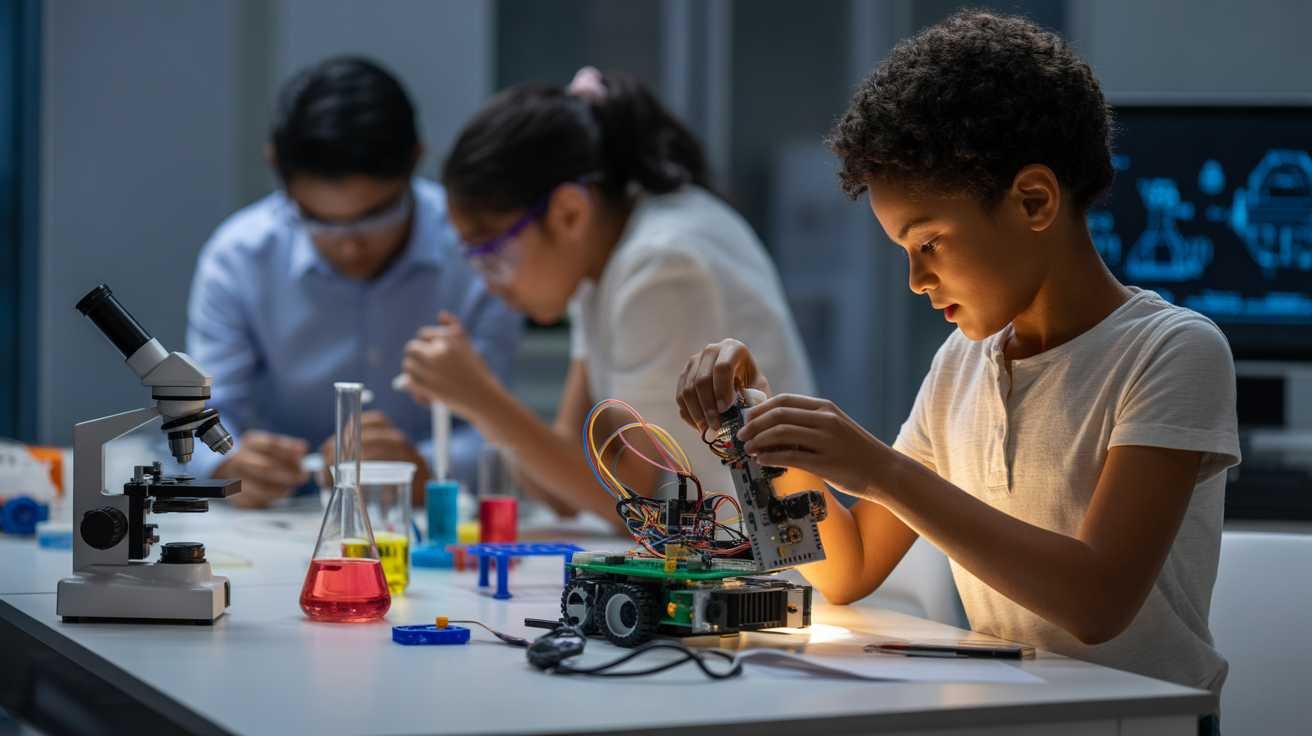
Imagine a classroom alive with the hum of curiosity, where students eagerly assemble circuits, code robots, and design sustainable solutions. This isn’t a futuristic dream – it’s the transformative power of hands-on STEM kits. These kits are revolutionizing education by bridging the gap between theoretical knowledge and real-world application. In this article, we’ll delve into how these tools are reshaping learning experiences, with a special focus on the McGuire Education Center’s innovative approach.
The Rise of Hands-On Learning in STEM Education
The traditional classroom, once dominated by lectures and rote memorization, is giving way to a more dynamic and interactive learning environment. Hands-on STEM kits are at the forefront of this educational revolution. By engaging students in practical activities, these kits foster a deeper understanding of scientific principles and their applications. At the McGuire Education Center, educators have embraced this shift, integrating hands-on learning into their curriculum to enhance student engagement and comprehension.
These kits encompass a wide range of activities – from building simple machines to programming microcontrollers. The tactile nature of these tasks allows students to see and feel the concepts they are learning about, making abstract ideas more concrete. For instance, constructing a bridge model can teach principles of engineering and physics, while coding a robot introduces students to computer science and problem-solving skills. The McGuire Education Center has observed significant improvements in student performance and enthusiasm when these hands-on methods are employed.
Real-World Applications: Connecting Theory to Practice
One of the most compelling aspects of hands-on STEM kits is their ability to connect classroom learning to real-world scenarios. Students don’t just learn about concepts – they apply them to solve actual problems. This approach not only reinforces theoretical knowledge but also demonstrates its relevance in everyday life. The McGuire Education Center has developed projects that address real-world challenges, such as designing energy-efficient buildings or creating sustainable water filtration systems, allowing students to see the impact of their work beyond the classroom.
For example, students might use sensors to monitor environmental conditions, analyze the data collected, and propose solutions to improve air quality. These projects not only teach scientific principles but also cultivate critical thinking, creativity, and a sense of responsibility. By engaging in such activities, students develop a deeper appreciation for the role of science and technology in addressing global issues. The McGuire Education Center’s commitment to real-world applications ensures that students are not only knowledgeable but also prepared to make meaningful contributions to society.
Fostering Collaboration and Teamwork
Hands-on STEM projects often require collaboration, providing students with opportunities to work together, share ideas, and solve problems collectively. This collaborative environment mirrors real-world workplaces, where teamwork is essential. At the McGuire Education Center, group projects are a staple of the curriculum, encouraging students to communicate effectively, delegate tasks, and support one another in achieving common goals.
Through these collaborative experiences, students learn valuable interpersonal skills, such as conflict resolution, leadership, and empathy. They also gain a sense of community and belonging, which can enhance their overall educational experience. The McGuire Education Center’s emphasis on teamwork prepares students for future careers, where collaboration is often key to success. By working together on hands-on projects, students not only achieve academic goals but also develop the social and emotional skills necessary for personal and professional growth.
Enhancing Problem-Solving and Critical Thinking Skills
Hands-on STEM kits challenge students to think critically and solve problems creatively. Unlike traditional assessments that often have a single correct answer, these kits present open-ended challenges that require students to explore multiple solutions. This problem-solving approach encourages students to think outside the box, test hypotheses, and learn from failure – a crucial aspect of the scientific method. The McGuire Education Center incorporates such challenges into its curriculum, allowing students to tackle complex problems and develop innovative solutions.
For instance, students might be tasked with designing a device to reduce energy consumption in a school building. They would need to research existing technologies, brainstorm ideas, prototype their designs, and test their effectiveness. This process not only reinforces scientific concepts but also hones skills in research, design, and evaluation. The McGuire Education Center’s commitment to fostering problem-solving skills ensures that students are well-equipped to face the challenges of the future.
Building Confidence Through Achievement
Completing a hands-on project provides students with a tangible sense of accomplishment. This achievement boosts their confidence and motivates them to tackle more complex challenges. At the McGuire Education Center, students often showcase their projects in exhibitions or competitions, where they can share their work with peers, educators, and the community. These events celebrate student achievements and highlight the practical applications of their learning.
For example, a student who designs a functional model of a renewable energy source might present it at a science fair, receiving feedback and recognition for their work. Such experiences validate students’ efforts and reinforce the value of their learning. The McGuire Education Center’s focus on celebrating student achievements fosters a positive learning environment where students feel valued and empowered to pursue their interests and passions.
Integrating Technology for Enhanced Learning
Modern hands-on STEM kits often incorporate technology, providing students with tools to enhance their learning experiences. From programmable microcontrollers to virtual simulations, technology expands the possibilities of what students can create and learn. The McGuire Education Center leverages technology to offer students access to cutting-edge resources and tools, enriching their educational journey.
For instance, students might use 3D printers to create prototypes of their designs or employ coding platforms to program their projects. These technological tools not only make learning more engaging but also prepare students for a tech-driven world. The McGuire Education Center’s integration of technology ensures that students are not only consumers of technology but also creators and innovators, equipped with the skills needed for future success.
Supporting Diverse Learning Styles
Hands-on STEM kits cater to a variety of learning styles, making STEM education more inclusive. Visual learners benefit from seeing and manipulating physical models, auditory learners engage through discussions and explanations, and kinesthetic learners thrive by physically building and experimenting. The McGuire Education Center recognizes the importance of accommodating diverse learning styles and designs its curriculum to be flexible and accessible to all students.
By providing a range of activities and resources, the McGuire Education Center ensures that every student has the opportunity to succeed. Whether it’s through individualized support, collaborative projects, or technology-enhanced learning, the center strives to meet the unique needs of each learner. This inclusive approach fosters a positive and supportive learning environment where all students can reach their full potential.
Preparing Students for Future Careers
Hands-on STEM education equips students with skills that are highly valued in the workforce, such as problem-solving, critical thinking, collaboration, and technical proficiency. The McGuire Education Center’s emphasis on real-world applications and project-based learning prepares students for careers in science, technology, engineering, and mathematics fields. By engaging in hands-on projects, students gain practical experience that enhances their employability and readiness for the challenges of the modern workplace.
For example, students might participate in internships or mentorship programs, where they can apply their skills in real-world settings and gain insights into potential career paths. These experiences provide valuable exposure to various professions and help students make informed decisions about their futures. The McGuire Education Center’s commitment to career readiness ensures that students are not only academically prepared but also equipped with the skills and experiences needed to succeed in their chosen careers.
Conclusion: Embracing the Future of Education
Hands-on STEM kits are more than just educational tools – they are gateways to a future where students are active participants in their learning, creators of innovative solutions, and prepared for the challenges and opportunities of the 21st century. The McGuire Education Center’s dedication to hands-on learning, real-world applications, and student empowerment sets a model for educational institutions worldwide. By embracing these approaches, we can inspire the next generation of scientists, engineers, and problem solvers, ensuring a brighter and more innovative future for all.
If you want to explore how innovative tools can ignite a passion for learning, consider the intersection of robotics and paralegal education oregon, where technology meets essential skills for the future.
If you want to understand how hands-on learning experiences can shape young minds, explore the role of pre university education in fostering curiosity and innovation through robotics and coding kits.
To learn more about how hands-on activities can enhance teamwork in various learning environments, explore the impact of RFK special education initiatives that integrate STEM project kits.