
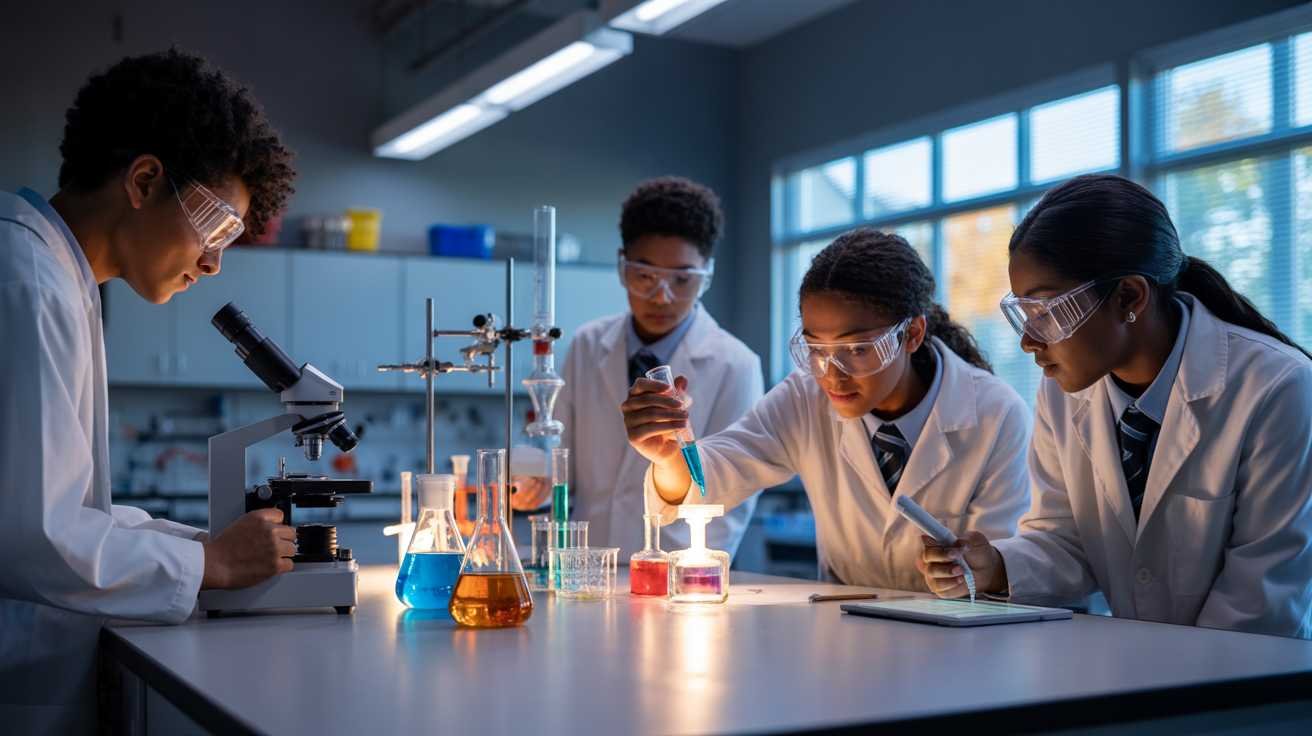
In the ever-evolving landscape of STEM education, the urgency to cultivate research-ready minds has never been more pressing. Traditional teaching methods are rapidly being overshadowed by innovative, student-led experiments that not only ignite curiosity but also forge essential research skills. Imagine a classroom where students are not mere recipients of knowledge but active participants in the scientific process, designing and conducting their own experiments. This paradigm shift is more than a trend; it’s a necessity for preparing students to navigate and contribute to the complex scientific challenges of the 21st century.
The Power of Student-Led Inquiry
Student-led experiments transform passive learning into an active, engaging process. When students take the reins of their learning, they develop a deeper understanding of scientific concepts and methodologies. This hands-on approach fosters critical thinking, problem-solving, and analytical skills, which are indispensable in research. By formulating hypotheses, designing experiments, and analyzing data, students experience firsthand the intricacies of the scientific method. This immersive learning process not only enhances their academic performance but also prepares them for future research endeavors. The shift from traditional teacher-directed learning to student-led inquiry is not just a pedagogical change; it’s a fundamental evolution in how we approach education in STEM fields.
Bridging the Gap Between Theory and Practice
One of the most significant advantages of student-led experiments is their ability to bridge the gap between theoretical knowledge and practical application. In many traditional STEM classrooms, students learn scientific theories without fully understanding how they apply in real-world scenarios. Student-led experiments provide the opportunity to connect classroom learning with practical experience. Students can test theories, observe outcomes, and refine their understanding based on empirical evidence. This experiential learning process deepens their comprehension and makes abstract concepts more tangible. The ability to apply theoretical knowledge in practical settings is a crucial skill for any aspiring researcher and is cultivated through student-led experimentation.
Fostering Collaboration and Communication Skills
Research is rarely a solitary endeavor; it often involves collaboration and effective communication. Student-led experiments inherently promote teamwork as students work together to design, conduct, and analyze experiments. This collaborative environment helps students develop interpersonal skills, such as negotiation, conflict resolution, and collective problem-solving. Additionally, presenting their findings to peers and instructors hones their communication skills, enabling them to articulate complex ideas clearly and persuasively. These experiences mirror the collaborative nature of real-world research and prepare students for future roles in scientific teams and research institutions.
Enhancing Engagement and Motivation
Engagement and motivation are critical factors in successful learning outcomes. Student-led experiments inherently increase engagement by placing students at the center of the learning process. When students have ownership over their learning, they are more invested in the outcomes and more motivated to succeed. This increased engagement leads to a deeper commitment to learning and a greater willingness to tackle challenging problems. Moreover, the sense of accomplishment that comes from successfully conducting an experiment and obtaining meaningful results boosts students’ confidence and reinforces their motivation to pursue further scientific inquiry.
Developing Critical Thinking and Problem-Solving Abilities
Critical thinking and problem-solving are at the heart of scientific research. Student-led experiments challenge students to think critically about the problems they are investigating, the methods they are employing, and the interpretations they are making. This process encourages them to question assumptions, consider alternative explanations, and evaluate evidence rigorously. By navigating the complexities of experimental design and data analysis, students develop robust problem-solving skills that are applicable across various disciplines and real-world situations. These skills are not only essential for research but are also highly valued in many professional fields.
Preparing for Future Research Opportunities
Exposure to student-led experiments provides students with a foundational understanding of research methodologies, preparing them for future opportunities in scientific research. Whether pursuing higher education or entering the workforce, students with experience in conducting experiments are better equipped to engage in research projects and contribute to scientific advancements. This early exposure demystifies the research process and instills a sense of confidence in students’ abilities to undertake independent research endeavors. By fostering a research-oriented mindset, student-led experiments lay the groundwork for lifelong learning and discovery.
Overcoming Challenges and Embracing Innovation
Implementing student-led experiments is not without its challenges. It requires a shift in mindset from traditional teaching methods and may necessitate changes in curriculum design and assessment strategies. However, the benefits far outweigh the challenges. Educators can overcome these obstacles by providing adequate resources, offering guidance and support, and creating an environment that encourages experimentation and innovation. Embracing student-led experiments fosters a culture of inquiry and resilience, where students learn to view challenges as opportunities for growth and innovation. This mindset is crucial for navigating the complexities of modern scientific research and technological development.
Real-World Success Stories
Across the globe, institutions are witnessing the transformative impact of student-led experiments. For instance, the National Institute of Science Education and Research (NISER) in India developed ViLEG (Virtual Laboratory Experiments for Graduates), a software aimed at helping rural students access and experience STEM laboratory experiments virtually. This initiative has empowered students from underrepresented communities to gain practical experience in research methodologies, enhancing their understanding of scientific concepts and encouraging them to pursue STEM careers. Such programs demonstrate the potential of student-led experiments to democratize access to quality STEM education and inspire the next generation of researchers.
In conclusion, student-led experiments are not merely an educational trend; they are a critical component of modern STEM education. By fostering critical thinking, problem-solving, collaboration, and communication skills, these experiments prepare students for the challenges and opportunities of the future. The urgency to integrate student-led experiments into STEM curricula is paramount, as they equip students with the tools and mindset necessary for success in research and beyond. Educators and institutions must recognize the transformative power of student-led experiments and take proactive steps to incorporate them into their teaching practices. The future of STEM education depends on it.
If you want to enhance your understanding of collaborative learning, consider how programs like hawkins driver education can foster essential skills in STEM clubs.
If you want to enhance your problem-solving skills while navigating the intricacies of coding, consider exploring hunters education Indiana as a valuable resource for hands-on projects that can ignite your creativity.
If you want to explore the intersection of technology and creativity, hands-on robotics projects can significantly enhance your skills. Discover how Meta Title can lead to innovative thinking and problem-solving abilities.
If you want to explore how practical experiences enhance learning, consider the role of lcti adult education in bridging the gap between theory and application in modern science and technology curricula.