
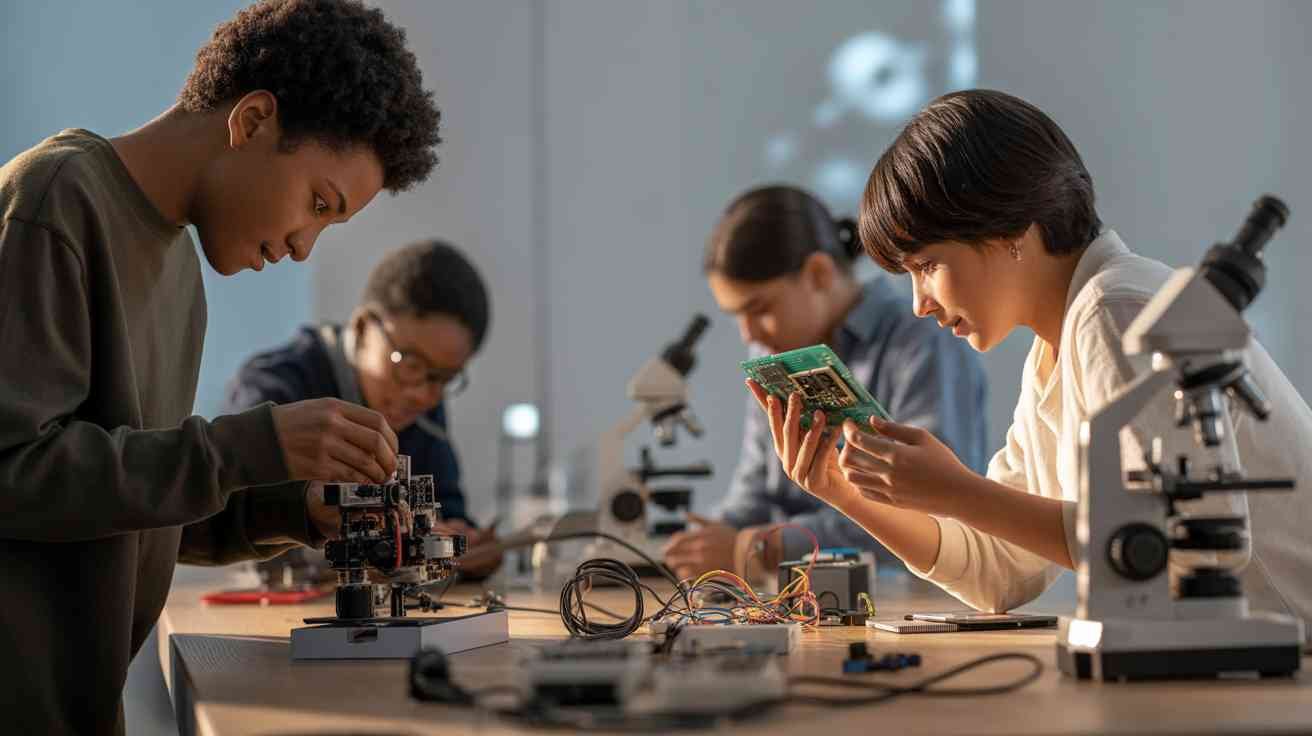
In today’s rapidly evolving world, where innovation and adaptability are paramount, the traditional methods of education are being challenged. The static, one-size-fits-all approach no longer suffices. Enter project-based STEM kits – a dynamic, hands-on learning experience that not only captivates the imagination but also equips learners with the essential skills for the future. These kits are more than just educational tools; they are gateways to a world of discovery, creativity, and critical thinking. As the demand for STEM proficiency intensifies globally, integrating these kits into learning environments has become not just beneficial but imperative.
Immersive Learning Experiences That Engage the Senses
Imagine the tactile sensation of assembling a circuit, the visual satisfaction of a light bulb illuminating, or the auditory delight of gears meshing seamlessly. Project-based STEM kits transform abstract concepts into tangible experiences. They bridge the gap between theory and practice, allowing learners to see, touch, and manipulate the very principles they study. This multisensory engagement deepens understanding and retention, making learning not just effective but also enjoyable. The hands-on nature of these kits fosters a deeper connection to the material, ensuring that lessons are not merely learned but experienced.
Fostering Critical Thinking and Problem-Solving Skills
At the heart of every project-based STEM kit lies a challenge. Whether it’s designing a sustainable energy solution or creating a robotic arm, these kits present real-world problems that require innovative solutions. Learners are encouraged to hypothesize, experiment, and iterate, mirroring the processes employed by scientists and engineers. This approach cultivates critical thinking, adaptability, and resilience. By navigating obstacles and refining their designs, learners develop a mindset geared towards problem-solving, preparing them for the complexities of the modern world.
Encouraging Collaboration and Communication
Modern challenges are seldom solved in isolation. Project-based STEM kits often involve collaborative tasks that necessitate teamwork. Learners must communicate their ideas, delegate responsibilities, and synthesize diverse perspectives to achieve a common goal. This collaborative environment mirrors real-world scenarios, where interdisciplinary teams work together to innovate and solve problems. Through these interactions, learners hone their communication skills, learn the value of diverse viewpoints, and understand the importance of collective effort in achieving success.
Building Confidence Through Achievement
Completing a project is a powerful confidence booster. The sense of accomplishment that comes from seeing a project through from conception to completion instills a belief in one’s abilities. Project-based STEM kits provide learners with the opportunity to tackle challenges, overcome setbacks, and celebrate successes. This journey not only enhances self-esteem but also reinforces the value of perseverance and determination. As learners witness their ideas materialize into functional creations, they gain confidence in their problem-solving abilities and creative potential.
Preparing Learners for Future Careers
The future job market is increasingly leaning towards STEM-related fields. By engaging with project-based STEM kits, learners acquire skills that are highly sought after in today’s economy. From coding and robotics to environmental science and engineering, these kits provide a foundation in critical areas of expertise. Moreover, the interdisciplinary nature of the projects encourages learners to draw connections between different fields, fostering a holistic understanding of complex issues. This preparation ensures that learners are not only ready for future careers but are also equipped to innovate and lead in their chosen paths.
Promoting Lifelong Learning and Curiosity
Education is not a destination but a journey. Project-based STEM kits ignite a passion for learning that extends beyond the classroom. The curiosity sparked by these kits encourages learners to explore new topics, seek out additional resources, and continue their educational pursuits throughout life. This intrinsic motivation fosters a love for learning that persists long after the completion of a project. By cultivating curiosity and a thirst for knowledge, these kits lay the groundwork for lifelong learning and personal growth.
Integrating Project-Based STEM Kits into Educational Curricula
To maximize the benefits of project-based STEM kits, it’s essential to integrate them thoughtfully into educational curricula. This integration involves aligning projects with learning objectives, providing adequate resources and support, and creating an environment that encourages exploration and experimentation. Educators play a pivotal role in facilitating this integration by guiding learners, fostering a culture of inquiry, and ensuring that projects are accessible and inclusive. By embedding these kits into the curriculum, educational institutions can provide learners with rich, hands-on experiences that enhance their understanding and appreciation of STEM subjects.
Addressing the Digital Divide and Ensuring Accessibility
While project-based STEM kits offer numerous benefits, it’s crucial to ensure that they are accessible to all learners, regardless of socioeconomic background. Efforts must be made to provide equitable access to these resources, whether through subsidies, community programs, or partnerships with organizations dedicated to educational equity. By addressing the digital divide and ensuring that all learners have the opportunity to engage with these kits, we can promote inclusivity and equal opportunities in STEM education.
Conclusion: Embracing the Future of Education
Project-based STEM kits represent the future of education – dynamic, engaging, and deeply connected to the real world. They empower learners to take control of their learning journey, fostering skills and mindsets that are essential for success in the 21st century. As we look towards the future, integrating these kits into educational frameworks is not just a trend but a necessity. By embracing this approach, we can cultivate a generation of learners who are not only knowledgeable but also innovative, adaptable, and prepared to tackle the challenges of tomorrow.
If you are looking for innovative ways to engage students in STEM, consider visiting the mcguire education center, where hands-on kits foster exploration of real-world applications.