
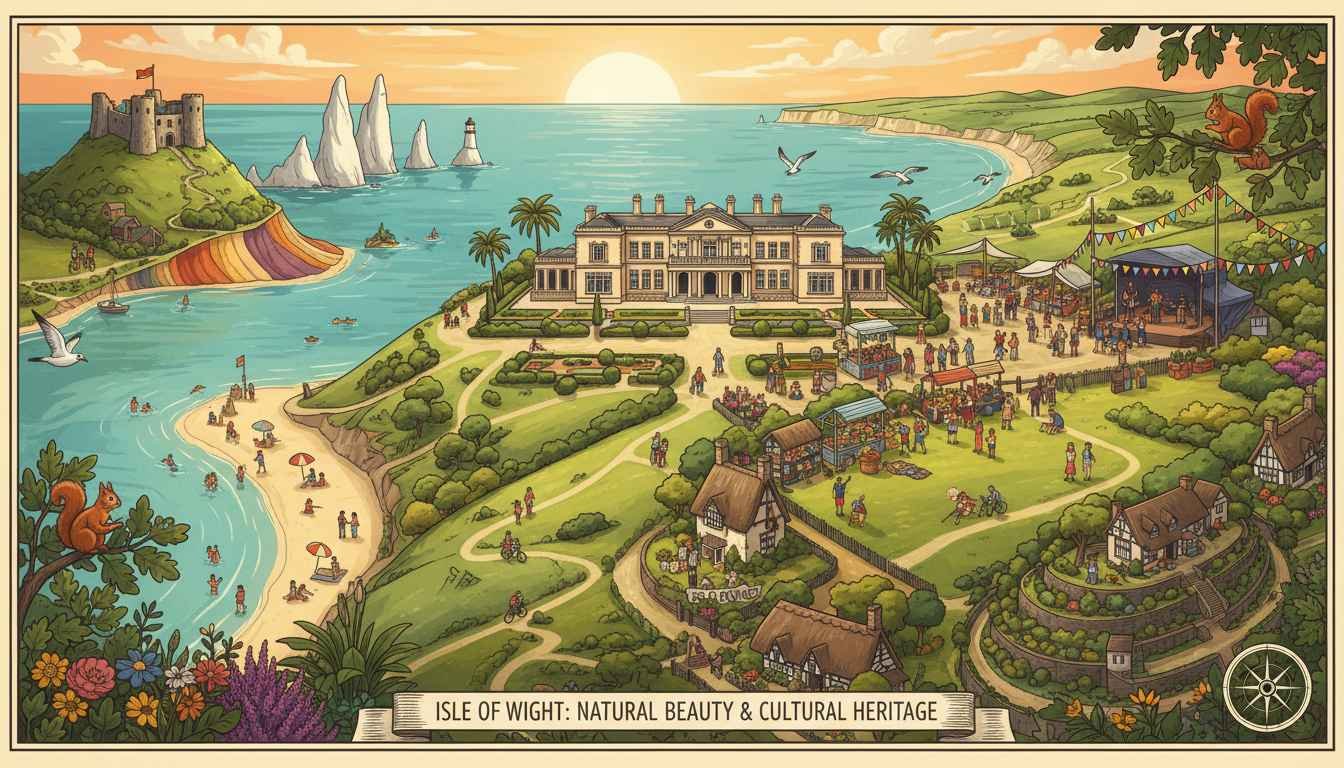
The places to visit on the Isle of Wight combine dramatic coastal scenery, historic landmarks, charming towns, gardens, beaches, and outdoor experiences. Located just off the south coast of England, the island offers a compact destination where travelers can experience royal heritage, medieval history, spectacular cliffs, traditional seaside communities, and peaceful countryside in the same trip.
Whether you are planning a short break or a longer island holiday, these are some of the most worthwhile places and experiences to include in an Isle of Wight itinerary.
1. The Needles and Alum Bay
The Needles is one of the most recognizable landmarks on the Isle of Wight. The distinctive chalk stacks rise from the sea at the western end of the island, creating one of the most memorable coastal landscapes in southern England.
Alum Bay is an excellent base for experiencing the scenery. Visitors can enjoy views of the Needles, explore the coastline, and take the famous chairlift toward the beach and its colorful cliffs. The area is particularly attractive for photography because the combination of white chalk formations, sea views, cliffs, and changing coastal light creates a dramatic landscape.
The nearby Old Battery also adds a historical dimension to the visit. The former coastal fortification provides a different perspective on the Needles while helping visitors understand the island’s strategic military importance.
2. Osborne House
For travelers interested in British royal history, Osborne House is one of the most important places to visit on the Isle of Wight. The former seaside residence of Queen Victoria and Prince Albert offers an insight into the private and public life of the royal family.
The estate includes historic rooms, landscaped grounds, gardens, the Swiss Cottage associated with the royal children, and coastal views. The house is especially valuable for visitors who want more than a conventional museum experience because the surrounding estate helps place the royal residence within its original seaside setting.
Allow enough time to explore the grounds rather than visiting only the main house. The gardens, woodland areas, and views across the Solent contribute significantly to the overall experience.
3. Carisbrooke Castle
Carisbrooke Castle is another essential stop for travelers interested in the island’s history. The castle has more than 800 years of history and is closely associated with King Charles I, who was imprisoned there before his execution.
Visitors can explore the medieval defenses, castle grounds, chapel, museum spaces, and historic features that reveal how the site developed over centuries. The castle provides a strong contrast with the island’s coastal attractions and is particularly worthwhile for travelers who enjoy medieval architecture and political history.
Carisbrooke is also useful as part of a broader historical itinerary because the Isle of Wight contains several castles, forts, museums, and heritage sites that reflect different periods of the island’s past.
4. Shanklin and Shanklin Old Village
Shanklin offers a classic Isle of Wight seaside experience, combining coastal scenery with traditional architecture and local character. The town is known for its beach, cliff scenery, independent businesses, and the picturesque atmosphere of Shanklin Old Village.
The Old Village is especially appealing for visitors who want to slow down and explore rather than simply move between major attractions. Traditional buildings, small shops, cafés, and places to eat create opportunities to experience the island’s more intimate side.
Shanklin also works well as a base for exploring nearby coastal walks and other attractions in the southeastern part of the island.
5. Ventnor and Ventnor Botanic Garden
Ventnor is one of the island’s most distinctive coastal towns. Its sheltered position and attractive seaside setting make it a popular destination for visitors looking for scenery, gardens, cafés, and a relaxed atmosphere.
One of the area’s standout attractions is Ventnor Botanic Garden. The garden benefits from the local microclimate and contains a wide range of plants and landscaped areas. It offers a quieter alternative to the island’s larger attractions and is particularly suitable for travelers interested in gardens, photography, and nature.
A visit to Ventnor can therefore combine a coastal town walk with time spent exploring one of the island’s most distinctive horticultural attractions.
6. Cowes and East Cowes
Cowes and East Cowes are ideal places to experience the Isle of Wight’s maritime character. The towns have a long association with sailing and remain closely connected with life on the Solent.
Visitors can explore waterfront areas, browse local businesses, enjoy cafés and restaurants, and experience the atmosphere of a working coastal community. Cowes is also associated with major sailing events, giving the town a lively character at key times of the year.
East Cowes is particularly important for travelers visiting Osborne House, making it easy to combine royal heritage with maritime scenery in the same part of the island.
7. Bembridge and Bembridge Windmill
Bembridge provides another opportunity to experience the island’s quieter coastal character. The village and surrounding area are known for their maritime setting, beaches, harbor views, and traditional atmosphere.
One of the area’s notable landmarks is Bembridge Windmill, a historic windmill that adds a distinctive architectural feature to the landscape. It is particularly attractive to photographers and visitors interested in traditional rural heritage.
Exploring Bembridge can be a good choice for travelers who want to balance the busier attractions with smaller communities and scenic coastal walks.
8. St Catherine’s Oratory
St Catherine’s Oratory, sometimes known locally as the Pepperpot, stands on high ground near Chale in the southern part of the island. The medieval monument offers both historical interest and an elevated viewpoint over the surrounding landscape.
The structure is one of the Isle of Wight’s most distinctive historic landmarks. Reaching it also gives travelers an opportunity to experience the countryside and open landscapes away from the main coastal towns.
Because the site sits on elevated terrain, visitors should plan for a walk and choose suitable footwear, particularly when conditions are wet.
9. Brading Roman Villa
Travelers interested in ancient history should consider Brading Roman Villa. The archaeological site provides insight into Roman life on the island and is particularly notable for its surviving mosaics and interpretation of the villa complex.
The villa adds an important ancient-history layer to an itinerary that might otherwise focus mainly on Victorian, medieval, and maritime heritage. It can therefore be combined with Carisbrooke Castle and Osborne House to create a broader journey through different periods of Isle of Wight history.
10. Yarmouth and Yarmouth Castle
Yarmouth is a charming harbor town in the west of the Isle of Wight. Its waterfront setting, narrow streets, independent businesses, and access to nearby countryside make it a pleasant destination for a slower-paced day.
Yarmouth Castle adds historical interest to the town. The Tudor fortification reflects the island’s strategic position and its long relationship with coastal defense.
Yarmouth can also be a useful starting point for exploring other western attractions, including the landscapes around the Needles and nearby coastal areas.
11. Coastal Walks and Scenic Viewpoints
The Isle of Wight is an excellent destination for travelers who want to experience the landscape on foot. Coastal paths reveal cliffs, beaches, countryside, sea views, and historic landmarks that can be missed when traveling only by car.
The western coastline around the Needles is particularly dramatic, while areas near Ventnor, Shanklin, and the southern coast provide different combinations of cliffs, beaches, and countryside.
Before setting out, check local conditions and choose a route that matches your fitness level. Some coastal sections involve uneven ground, steep gradients, or exposed terrain.
12. Beaches and Seaside Experiences
For visitors who want a traditional coastal holiday, the island’s beaches provide plenty of opportunities for relaxation. Sandown, Shanklin, Ventnor, and other coastal communities offer different seaside environments, from broad beaches to more sheltered coastal settings.
Beach days can easily be combined with sightseeing. For example, travelers can explore a historic attraction in the morning, enjoy a coastal walk or beach in the afternoon, and finish the day in one of the island’s towns.
13. Nature Reserves and Wildlife
Beyond its famous landmarks, the Isle of Wight has protected landscapes and wildlife habitats that make it appealing to nature lovers. Coastal areas, wetlands, countryside, and nature reserves provide opportunities to observe birds, plants, and other wildlife.
Visitors interested in wildlife should keep to marked paths, follow local conservation guidance, and avoid disturbing animals or sensitive habitats. Spring and summer can be particularly rewarding for combining outdoor walks with wildlife observation, although conditions vary throughout the year.
14. How to Plan an Isle of Wight Sightseeing Trip
The best itinerary depends on how long you have and what interests you most. A short visit should focus on a few major attractions rather than trying to cover the entire island.
- For history lovers: prioritize Osborne House, Carisbrooke Castle, Brading Roman Villa, and Yarmouth Castle.
- For scenic views: focus on the Needles, Alum Bay, southern coastal viewpoints, and countryside walks.
- For seaside trips: consider Shanklin, Ventnor, Sandown, and Bembridge.
- For gardens and relaxed sightseeing: include Ventnor Botanic Garden and the grounds around Osborne House.
- For families: combine beaches and outdoor attractions with selected heritage sites rather than filling every day with museums.
Travelers arriving from the mainland should also plan ferry or hovercraft connections before building a detailed itinerary. The official Isle of Wight tourism guide provides current information about getting around, attractions, accommodation, events, and travel planning.
15. When Is the Best Time to Visit the Isle of Wight?
Spring and summer are popular for sightseeing, coastal walks, gardens, and beach activities because longer daylight hours make it easier to combine several attractions in one day. The island can also be enjoyable outside peak summer, particularly for visitors who prefer quieter walks, historic sites, and changing coastal scenery.
Always check individual attraction opening information before traveling because seasonal schedules can vary. Weather conditions can also affect coastal walks and outdoor activities.
Frequently Asked Questions
What are the best places to visit on the Isle of Wight?
Some of the most notable choices include the Needles, Alum Bay, Osborne House, Carisbrooke Castle, Shanklin, Ventnor, Cowes, Bembridge, Yarmouth, and Brading Roman Villa.
Is the Isle of Wight good for history lovers?
Yes. The island has attractions covering Roman, medieval, Tudor, military, maritime, and Victorian history. Osborne House, Carisbrooke Castle, Brading Roman Villa, and Yarmouth Castle are particularly useful for understanding different periods.
What is the most scenic place on the Isle of Wight?
The Needles and Alum Bay are among the island’s most famous scenic areas, with dramatic chalk cliffs, sea views, and distinctive coastal formations.
Is the Isle of Wight suitable for families?
Yes. Families can combine beaches, gardens, outdoor activities, wildlife experiences, and selected heritage attractions to create an itinerary suitable for different ages.
Can you explore the Isle of Wight without spending the entire trip at beaches?
Absolutely. The island has castles, royal residences, archaeological sites, museums, gardens, villages, military landmarks, and walking routes, so a trip can be built around history and culture as easily as coastal activities.
Final Thoughts
The places to visit on the Isle of Wight offer much more than a traditional beach holiday. The island brings together dramatic coastline, historic castles, royal heritage, ancient archaeology, traditional villages, gardens, wildlife, and outdoor activities within a relatively compact destination.
For a first visit, combining the Needles and Alum Bay with Osborne House, Carisbrooke Castle, one or two coastal towns, and a scenic walk creates a balanced introduction to the island. Travelers with more time can explore quieter communities such as Bembridge and Yarmouth, visit Brading Roman Villa, and add gardens or nature reserves to the itinerary.
For broader destination inspiration, explore our guide to places to visit in Europe for history and our guide to travel destinations for local cuisine and cultural experiences.
For food-focused trip planning, the existing Gastronautguide resource can also help travelers explore regional cuisine and culinary destinations.