
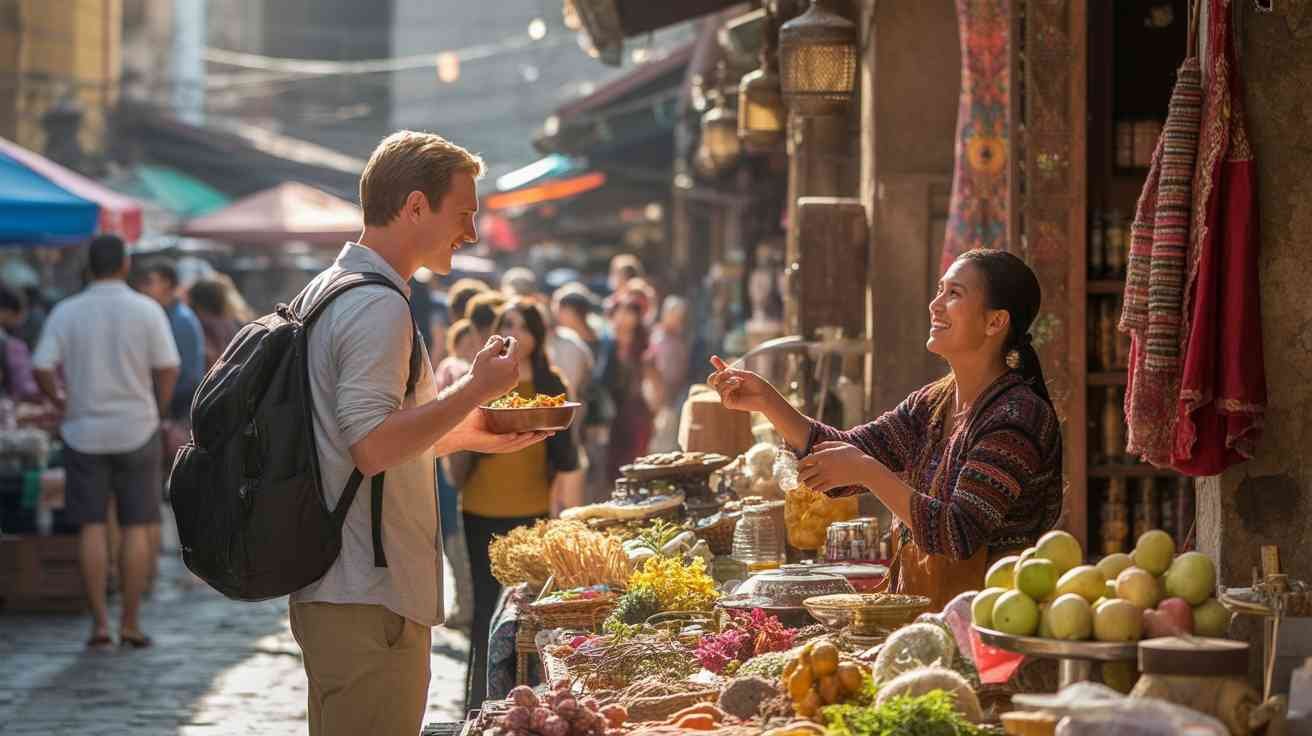
The best travel destinations for experiencing local cuisine and cultural activities offer opportunities to explore markets, taste regional dishes, visit historic landmarks, learn traditional crafts, attend cultural events, and interact respectfully with local communities.
From the street-food culture of Thailand and Vietnam to the historic food traditions of Italy and Japan, these destinations make food and culture an important part of the overall travel experience.
What Makes a Destination Great for Local Cuisine and Culture?
A strong culinary and cultural destination offers more than highly rated restaurants. The most rewarding experiences often happen in local markets, family-run restaurants, neighborhood cafés, traditional festivals, historic districts, museums, workshops, and community spaces.
When choosing a destination, consider:
- Regional food traditions: Look for destinations with distinctive local dishes and cooking methods.
- Historic neighborhoods: Older districts often reveal how food, architecture, and traditions developed together.
- Local markets: Markets provide an accessible way to experience ingredients, cooking traditions, and everyday life.
- Cultural activities: Cooking classes, craft workshops, performances, festivals, and guided heritage tours can add depth to a trip.
- Local businesses: Independent restaurants, bakeries, cafés, and shops can provide more insight into regional culture.
- Accessible heritage: Museums, archaeological sites, historic buildings, and cultural institutions help put local traditions into context.
1. Kyoto, Japan
Kyoto is one of the strongest destinations for travelers interested in the connection between food, history, architecture, and Japanese traditions.
The city is known for historic temples, traditional neighborhoods, gardens, tea culture, seasonal cuisine, and carefully prepared local dishes. Travelers can explore traditional markets, participate in tea experiences, take cooking classes, and visit historic areas such as Gion.
Kyoto is particularly rewarding when explored slowly. Instead of trying to visit every major attraction, spend time walking through different neighborhoods and combining cultural sites with local dining experiences.
2. Rome, Italy
Rome combines thousands of years of history with a food culture that remains part of everyday life.
Visitors can explore ancient ruins, Renaissance and Baroque architecture, churches, public squares, museums, and neighborhood markets before sitting down to traditional Roman dishes.
Roman cuisine is known for dishes such as carbonara, cacio e pepe, amatriciana, and saltimbocca. Exploring local trattorias and food markets provides a more grounded experience than focusing exclusively on tourist-oriented restaurants.
A walking food tour can also connect the city’s historic neighborhoods with its culinary traditions, making it easier to understand how the two developed together.
3. Bangkok, Thailand
Bangkok is an excellent destination for travelers who want energetic street life, temples, markets, and one of Southeast Asia’s most recognizable food cultures.
Street-food stalls, markets, neighborhood restaurants, and traditional dishes make food exploration easy to incorporate into a sightseeing itinerary.
Beyond food, travelers can visit temples, explore historic areas along the Chao Phraya River, experience traditional markets, and learn about Thai cultural practices.
For a deeper experience, consider a guided food tour or cooking class that explains ingredients and preparation techniques instead of simply sampling dishes.
4. Oaxaca, Mexico
Oaxaca is particularly appealing to travelers who want food to be a central part of their cultural experience.
The region is known for traditional Mexican cuisine, markets, mole, tlayudas, mezcal, handmade crafts, indigenous traditions, and historic architecture.
Travelers can explore local markets, visit artisan communities, take cooking classes, discover traditional crafts, and explore the historic center.
Oaxaca also demonstrates why regional food is important when exploring Mexico. Mexican cuisine varies significantly from one region to another, so experiencing local specialties can reveal aspects of history and culture that are easy to miss on a generalized itinerary.
5. Istanbul, Turkey
Istanbul sits at the intersection of Europe and Asia and offers an especially diverse combination of history, architecture, markets, and food.
Visitors can explore the Grand Bazaar, Spice Bazaar, historic mosques, palaces, waterfront neighborhoods, and traditional cafés while sampling Turkish dishes and regional specialties.
Food experiences can include breakfast spreads, grilled dishes, meze, Turkish sweets, seafood, and traditional beverages. A local food tour can help visitors understand the cultural significance behind different dishes.
Istanbul is also an excellent destination for travelers interested in traditional hammam culture, providing another way to experience a long-established local tradition.
6. Hanoi, Vietnam
Hanoi is an excellent destination for travelers who want to experience Vietnamese food within a historic urban environment.
The city’s Old Quarter provides an opportunity to explore narrow streets, markets, cafés, traditional shops, temples, and street-food stalls.
Vietnamese dishes such as pho, bun cha, banh mi, and regional noodle dishes can be experienced in everyday settings rather than only formal restaurants.
Travelers can also combine food exploration with visits to museums, historic landmarks, cultural performances, and traditional neighborhoods.
7. Lisbon, Portugal
Lisbon combines historic architecture, Portuguese food, music, markets, neighborhoods, and a relaxed urban atmosphere.
Travelers can explore Alfama’s narrow streets, visit historic viewpoints, experience traditional Portuguese dishes, and sample pastries such as pastéis de nata.
For a stronger cultural connection, consider listening to traditional Fado music, visiting local markets, and exploring neighborhoods beyond the busiest tourist streets.
Lisbon is also a useful base for discovering nearby destinations where regional food and traditions differ from those of the capital.
8. Florence, Italy
Florence is a strong choice for travelers who want to combine Italian cuisine with Renaissance history and art.
The city is home to major cultural landmarks, museums, historic squares, churches, artisan workshops, and food markets.
Visitors can try Tuscan specialties, explore local markets, take cooking classes, or visit nearby vineyards and countryside communities.
Florence works particularly well for travelers who enjoy combining museums and historic architecture with relaxed meals and regional food experiences.
9. Marrakech, Morocco
Marrakech offers a vivid combination of Moroccan cuisine, architecture, markets, crafts, gardens, and traditional experiences.
The medina provides opportunities to explore souks, artisan workshops, historic buildings, and food stalls. Travelers can sample tagine, couscous, pastilla, Moroccan salads, and traditional mint tea.
A guided medina tour can help visitors understand the history and purpose of different areas, while a cooking class can provide a more hands-on introduction to Moroccan food traditions.
10. New Orleans, Louisiana
New Orleans is one of the strongest destinations in the United States for combining food with music, architecture, history, and distinctive local traditions.
The city is known for Creole and Cajun influences, seafood, gumbo, jambalaya, po’boys, beignets, and a broad range of regional dishes.
The French Quarter, Garden District, historic neighborhoods, live music venues, museums, and cultural events provide plenty of opportunities to explore the city’s identity beyond its food.
Travelers can also take culinary tours that explain how different cultural influences shaped New Orleans cuisine.
11. Naples, Italy
Naples provides a more energetic and informal Italian food experience than many visitors expect.
The city is closely associated with Neapolitan pizza, but its culinary identity extends to pasta, seafood, pastries, street food, coffee, and local markets.
Naples also offers historic churches, underground archaeological spaces, museums, neighborhood markets, and access to major archaeological destinations such as Pompeii.
The combination of everyday food culture and ancient history makes Naples particularly interesting for travelers who want to understand the character of southern Italy.
12. Marrakech’s Atlas Mountain Region
Travelers with additional time in Morocco can extend their cultural exploration beyond Marrakech into the Atlas Mountains.
Mountain communities provide opportunities to experience different landscapes, traditional foods, local crafts, and village life.
Guided walks can combine outdoor scenery with cultural learning, while locally prepared meals provide an opportunity to experience regional cooking traditions outside the major tourist centers.
13. Lima, Peru
Lima has become an important destination for culinary travelers while also offering museums, historic neighborhoods, architecture, and access to Peru’s broader cultural heritage.
Peruvian cuisine reflects Indigenous, European, African, Asian, and other influences. Travelers can explore dishes such as ceviche, causa, lomo saltado, and a wide range of regional specialties.
The city can also serve as the beginning of a longer Peru itinerary that includes archaeological sites, mountain landscapes, and traditional communities.
14. Seoul, South Korea
Seoul combines modern city life with historic palaces, traditional neighborhoods, markets, Korean cuisine, and contemporary cultural experiences.
Travelers can visit traditional markets, explore palace grounds, walk through historic neighborhoods, and sample dishes such as bibimbap, bulgogi, Korean barbecue, and regional street foods.
For a deeper cultural experience, visitors can explore traditional crafts, Korean tea houses, cooking classes, or cultural districts where modern and traditional life exist side by side.
15. Barcelona, Spain
Barcelona offers a combination of Catalan cuisine, distinctive architecture, art, historic neighborhoods, markets, and Mediterranean culture.
Travelers can explore food markets, tapas bars, bakeries, historic streets, museums, and architectural landmarks while learning about Catalonia’s distinct cultural identity.
Local dishes and ingredients provide an easy way to understand the region, while neighborhoods such as the Gothic Quarter offer opportunities to explore Barcelona’s layered history.
Best Destinations for Local Cuisine and Cultural Activities by Region
Best in Europe
- Rome, Italy
- Florence, Italy
- Naples, Italy
- Lisbon, Portugal
- Barcelona, Spain
- Istanbul, Turkey
Best in Asia
- Kyoto, Japan
- Bangkok, Thailand
- Hanoi, Vietnam
- Seoul, South Korea
Best in the Americas
- Oaxaca, Mexico
- New Orleans, USA
- Lima, Peru
Best in North Africa
- Marrakech, Morocco
- Atlas Mountain communities in Morocco
Best Cultural Activities to Add to a Food-Focused Trip
Food is only one part of cultural travel. The strongest itineraries combine meals with activities that explain where the food and traditions come from.
Take a local cooking class
A cooking class can provide a more detailed understanding of local ingredients, preparation techniques, and culinary traditions. Choose a class that focuses on regional dishes rather than generic international recipes.
Visit a traditional market
Markets are useful places to observe everyday life and discover ingredients that may not be familiar to international visitors. Going with a knowledgeable local guide can make the experience more informative.
Explore historic neighborhoods
Walking through older neighborhoods can reveal connections between architecture, trade, religion, food, and local communities.
Attend a cultural performance
Music, dance, theater, and other traditional performances can provide insight into a destination’s cultural identity.
Visit artisan workshops
Craft traditions are often closely connected to local history. Pottery, textiles, woodwork, ceramics, jewelry, and other crafts can provide another perspective on the destination.
Eat where locals eat
Instead of relying entirely on restaurants designed for international visitors, explore neighborhood establishments and family-run businesses when appropriate.
How to Plan a Culinary and Cultural Vacation
A successful food-and-culture trip should leave enough time for spontaneous discoveries. Trying to schedule every meal and cultural activity can make the experience feel rushed.
Start by identifying two or three food experiences that are especially important to you. These might include a market tour, cooking class, famous regional dish, food festival, or traditional restaurant.
Then build cultural activities around them. A morning market visit can be followed by a museum, while an evening meal can be combined with music or a cultural performance.
Leave some unplanned time for cafés, neighborhood walks, local shops, and unexpected discoveries.
How to Experience Local Cuisine Responsibly
Culinary tourism can support local communities when travelers choose independent businesses and approach local traditions respectfully.
- Support locally owned restaurants and food businesses.
- Respect local dining customs.
- Ask before photographing people or vendors.
- Learn basic etiquette before visiting markets or religious sites.
- Avoid treating cultural traditions as entertainment without context.
- Be open to regional dishes rather than expecting familiar versions of international food.
- Follow local guidance regarding food safety and dietary restrictions.
Best Time for a Food and Cultural Vacation
There is no single best season for every destination. Travelers should consider weather, cultural calendars, harvest periods, festivals, local holidays, and tourism levels.
Food-focused travelers may particularly enjoy visiting during harvest seasons or regional culinary festivals, while culture-focused travelers may want to plan around major cultural events.
However, major festivals can also increase crowds and accommodation prices, so advance planning may be necessary.
Tips for a Better Cultural Travel Experience
- Research local etiquette before arrival. Small cultural differences can make a significant difference in how you experience a destination.
- Learn a few local words. Even basic greetings and expressions can make interactions more comfortable.
- Explore beyond major tourist areas. Neighborhoods often provide a better understanding of everyday life.
- Choose local guides when possible. Knowledgeable guides can explain history and traditions that are difficult to understand independently.
- Try regional specialties. Local dishes often tell a story about geography, history, and cultural influences.
- Allow time to slow down. Cultural travel is more rewarding when you are not constantly moving between attractions.
- Respect local communities. Remember that neighborhoods and cultural sites are part of people’s everyday lives, not simply tourist attractions.
Frequently Asked Questions
What are the best travel destinations for local cuisine and culture?
Kyoto, Rome, Bangkok, Oaxaca, Istanbul, Hanoi, Lisbon, Marrakech, New Orleans, Lima, Seoul, and Barcelona are among the strongest options for combining local food with cultural activities.
Which country is best for food and cultural experiences?
There is no single best country because preferences vary. Italy, Japan, Mexico, Thailand, Vietnam, Turkey, Morocco, and Peru are particularly strong choices because food is closely connected with regional history and cultural traditions.
What is the best city for a food-focused cultural trip?
Kyoto, Rome, Bangkok, Oaxaca, Istanbul, and New Orleans are excellent choices because travelers can combine local cuisine with historic neighborhoods, markets, museums, cultural activities, and local traditions.
How can I experience local culture while traveling?
Visit local markets, eat at independent restaurants, take cooking or craft classes, explore historic neighborhoods, attend cultural performances, use knowledgeable local guides, and spend time outside the most heavily visited tourist areas.
Are food tours worth taking?
A well-designed food tour can be worthwhile because a knowledgeable local guide can explain ingredients, history, neighborhood traditions, and the cultural background of dishes that you might otherwise simply taste without understanding.
How long should a culinary and cultural vacation be?
A week can work well for one city or region. Ten to fourteen days provide more flexibility for travelers who want to combine several cities or cultural regions without rushing.
Final Thoughts
The best travel destinations for experiencing local cuisine and cultural activities offer much more than famous restaurants and tourist attractions. They allow travelers to understand a place through its food, history, traditions, neighborhoods, markets, arts, and everyday life.
Kyoto provides a deep connection between Japanese food and traditional culture, Oaxaca highlights the diversity of Mexican culinary traditions, Bangkok combines street food with temples and markets, while Rome, Florence, and Naples connect Italian cuisine with centuries of history.
For a successful culinary and cultural vacation, focus on quality rather than quantity. Choose a destination with a food culture that genuinely interests you, explore beyond the obvious attractions, respect local traditions, and leave enough time to experience the destination at its own pace.
For more culinary travel inspiration, explore our guide to the best travel destinations for food lovers. You can also discover destinations that combine food, adventure, and wellness for a more varied vacation.
For broader travel inspiration, explore our guide to the best places to visit for vacation in the world.